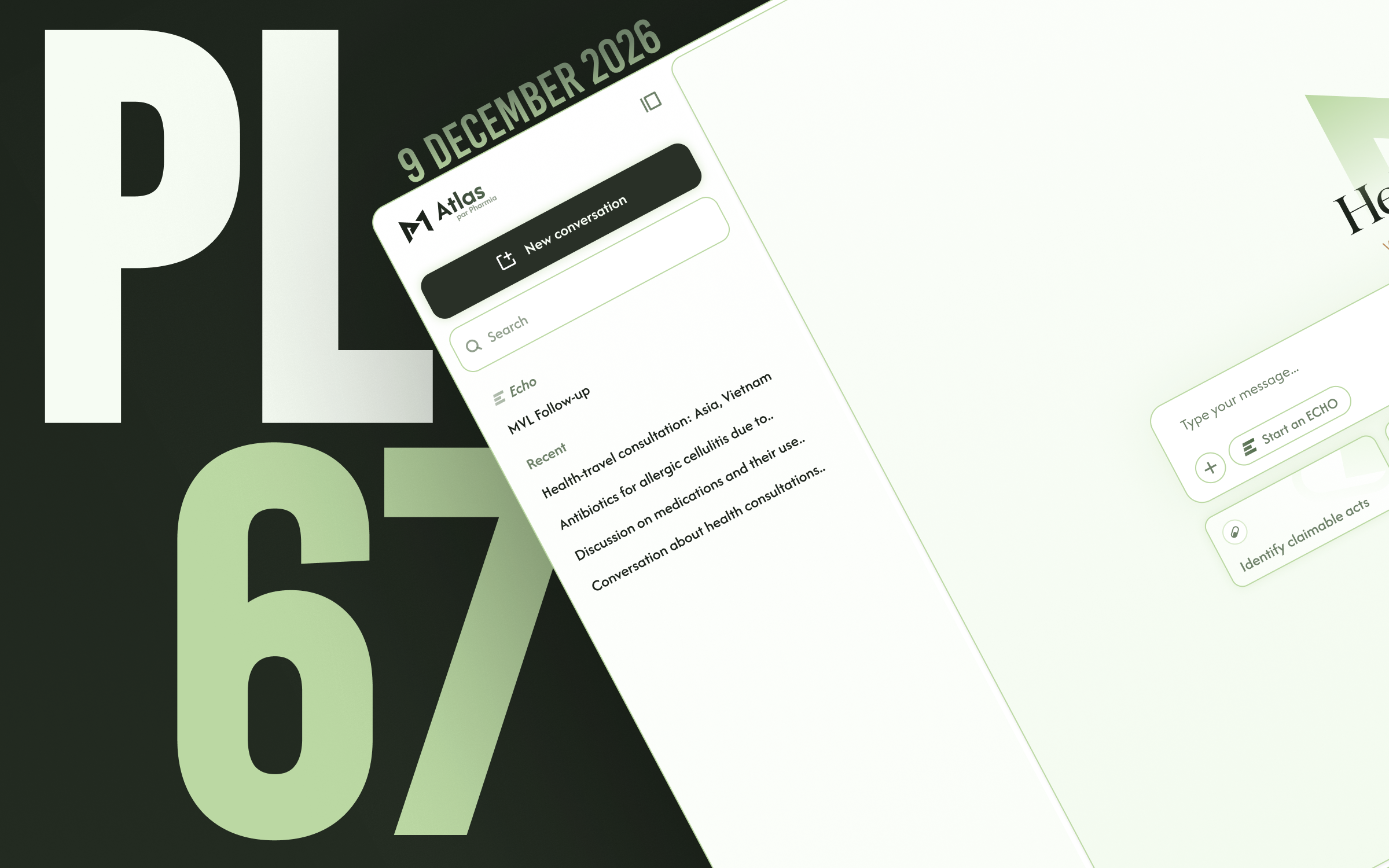
A patient with hypertension shows you several blood pressure readings above their target. Their physician has retired, and they ask what to do. Later that day, a patient seeks help for urinary symptoms she has never experienced before.
Can your team receive these requests, gather the right information and arrange the next steps? Starting December 9, 2026, expanded activities under Bill 67 (PL67) create new possibilities. Here are five recommendations to prepare your pharmacy, illustrated by three practical cases.
These fictional situations help teams prepare. They illustrate decisions to work through and do not constitute treatment protocols. Sources checked on October 12, 2026.
Bill 67: the main changes at a glance
| Activity | Already permitted | What changes on December 9, 2026 | Essential conditions and limits |
|---|---|---|---|
| Prescribing for a common health condition | Prescribing for certain previously treated minor conditions and other expressly defined situations. | Independent prescribing for a common health condition, without a prior diagnosis. | All five criteria must apply. High prevalence in the relevant patient population or general population. Typical, readily identifiable and assessable signs or symptoms. Expected improvement with follow-up and time-limited treatment. Low risk of deterioration in the short term. Low risk of harm, considering the patient, treatment and context. |
| Prescribing for a diagnosed chronic disease | Treatment adjustments and prescribing within certain collaborative arrangements. | Independent prescribing for a chronic disease that has already been diagnosed. | A professional authorized to diagnose and prescribe must have established the diagnosis. The patient must have a low risk of deterioration in the short term. This authorization does not create a general power to diagnose. |
| Preventive prescribing | Prescribing in defined situations, including vaccination, contraception and certain types of prophylaxis. | A broader framework for prescribing to prevent diseases, health conditions, signs or symptoms from developing. | Assessment of the situation, evidence-based prescribing and practice within the pharmacist’s competence. This authorization does not create a general power to diagnose. |
| Therapeutic substitution | Substitution for supply shortages, administration problems, safety risks, market withdrawal or unavailability within an institution. Generic substitution is also already permitted. | Addition of grounds that include exclusion from the patient’s insurance coverage. | The prescribed medication must be excluded from coverage; an administrative refusal alone is insufficient. The replacement must appear on Quebec’s List of Medications (Liste des médicaments). The pharmacist informs the patient and records the substitution. Inclusion on the List does not guarantee reimbursement. |
| Administering medication | Administration to demonstrate appropriate use, for vaccination or in an emergency, through authorized routes. | Administration for treatment when a prescription exists. Addition of transdermal, ophthalmic, otic and rectal routes. | A specific training certificate issued by the OPQ and a valid resuscitation training certificate. Intravenous administration is not among the authorized routes. |
| Specimen collection | Introducing an instrument into the pharynx. | Addition of introducing an instrument beyond the nasal vestibule. | This expansion does not provide general authorization for blood draws or other invasive specimen collection. |
1. Choose which activities to introduce gradually
Start with your patients’ needs and your team’s competencies. The final regulation expands prescribing and substitution, among other activities. The OPQ recommends gradual implementation, based on the pharmacist’s competence and the practice setting’s capacity.
Your team decision: choose the services you want to prepare first. For each service, identify competencies to strengthen and missing resources. An authorized activity also requires a setting capable of providing it.
2. Prepare the assessment and clinical references
With Atlas, before preparing this service: use a fictional case to research Quebec references and assessment points to discuss. Open the suggested sources and select those that support your procedure. Our Atlas overview describes this research workflow.
Case 1 — A first urinary tract infection
Situation. An adult patient describes burning during urination and frequent urges since the previous day. She has never received treatment for a urinary tract infection.
What Bill 67 adds. A first episode can be assessed under the common health condition framework when all five criteria in the table apply. The current minor-condition pathway relies on previous treatment. A request for an antibiotic does not automatically make the situation eligible.
What to check. The pharmacist clarifies symptoms, their progression, possible pregnancy, comorbidities, medications and allergies. Fever, flank pain or an unusual presentation changes the referral decision. The INESSS clinical guide helps prepare the assessment and referral criteria.
Preparation needed. Make references, referral criteria and follow-up arrangements accessible to pharmacists. Plan how to receive the request, share the information and explain the next steps to the patient. Specify when to reassess her and how she can reach the team. The intake team passes on the request without promising a prescription. The pathway must also support referral when the situation falls outside the permitted framework.
3. Organize follow-up for patients without a primary care provider
Case 2 — Diagnosed hypertension that needs reassessment
Situation. A patient with diagnosed hypertension returns with several blood pressure readings above their target. Their physician has retired. They already take medication and ask whether their treatment should change.
What Bill 67 adds. Independent prescribing for a diagnosed chronic disease can provide another option, such as adding medication when the situation warrants it. Already permitted treatment adjustments remain distinct from this new authorization. The conditions in the table apply.
What to check. The pharmacist confirms the recorded diagnosis, measurement technique, actual medication use, symptoms and relevant monitoring data. The risk of deterioration in the short term must remain low. An above-target blood pressure reading alone does not justify adding medication. Suspected hypertension is not an established diagnosis.
Preparation needed. Make readings, laboratory results and the follow-up plan accessible to pharmacists. Tell the patient how to reach the team if their condition changes. Keep referral contacts accessible to the team. Plan professional communications when circumstances justify them, including when the patient’s needs exceed the practice setting’s capacity.
4. Prepare a pathway for therapeutic substitution
Case 3 — A medication excluded from insurance coverage
Situation. A patient learns that her insurance does not cover the prescribed medication. Its cost makes her hesitate to start treatment. The team shares the exact reason for the refusal and the clinical need with the pharmacist.
What Bill 67 adds. Exclusion from coverage becomes grounds for therapeutic substitution. The table’s conditions apply, including the replacement’s inclusion on Quebec’s List of Medications (Liste des médicaments). This option does not guarantee reimbursement by the insurer.
What to check. The pharmacist distinguishes exclusion from coverage from an administrative problem and assesses whether another therapy suits the patient. Cost alone does not determine treatment. The pharmacist checks the replacement’s coverage conditions before presenting options to the patient.
Preparation needed. Prepare to collect the reason for refusal, consult the applicable list and explain the options. The record must show the substitution, information given to the patient and planned follow-up. Include professional communications when circumstances justify them.
5. Clarify roles and prepare documentation
For all three situations, clarify who receives the request, conducts the assessment and arranges the next steps:
- The intake team collects the required information and passes the request to the pharmacist, without announcing a clinical decision.
- The pharmacist assesses the situation, chooses the intervention or referral, then documents the reasoning and follow-up.
- The manager prepares consultation time slots, resources and the distribution of work.
With Nexus, before the consultation: if your pharmacy uses this module, the patient answers structured questions about symptoms, treatments and medical history. The pharmacist reviews the collected information, clarifies missing details and continues the assessment. Prepare the team’s pathway from the patient’s request through information collection to the consultation.
In the substitution case, “Insurance refused, product changed” leaves the next pharmacist without an explanation. Your template should show the confirmed reason, clinical assessment, chosen option and rationale, information given to the patient, and planned follow-up. Missing information remains identified.
With Echo, during the consultation: after obtaining consent to recording, record the interview, review the transcript and select the note template. After generation, the pharmacist corrects facts as needed and ensures all relevant information is organized appropriately. The Pharmia overview describes this documentation workflow.
Two dates for your preparation plan
- December 9, 2026: the regulation on expanded professional activities takes effect.
- March 31, 2028: deadline to successfully complete the OPQ’s general training, except for retired members. The OPQ states that this training is not a prerequisite for practising the expanded activities.
Scope reminder. General training does not replace the specific certificates required for certain activities, including medication administration. Professional authorization, the practice setting’s capacity and payment eligibility remain three separate questions.
Is your pharmacy ready for Bill 67?
- ☑ Priority activities to introduce have been identified.
- ☑ Each pharmacist has completed or planned the OPQ’s general training; required activity-specific certificates have been verified.
- ☑ Protocols, clinical references and referral criteria are current and accessible.
- ☑ Pharmacists’ and pharmacy technical assistants’ roles are clear, from intake through follow-up.
- ☑ Consultation and follow-up time slots are planned.
- ☑ Documentation tools organize the assessment, decision and planned follow-up.
Preparing for Bill 67 means making new services workable in your pharmacy. Your team needs accessible references, a structured assessment and follow-up it can provide.
Prepare your pharmacy for Bill 67 with Pharmia — Discover our 3 modules
Official sources
- Gazette officielle du Québec — Order in Council 1340-2026, sections 1, 2, 8–12 and 19.
- OPQ — Professional practice guide, sections 3.1.1, 3.1.2, 5 and 6. These cover minor conditions, prescribing without a prior diagnosis, substitution and administration before December 9, 2026.
- OPQ — December 9: an evolution to introduce gradually, October 5, 2026.
- OPQ — L’Express, August 20, 2026, training and deadline.
Leave a Reply